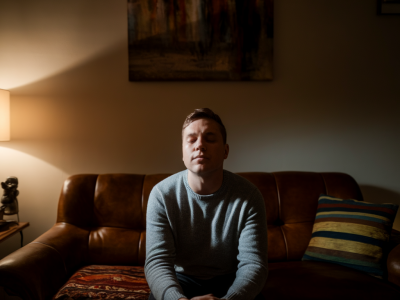
I used to think a good night's sleep was something you got lucked into — or earned after a long, exhausting day. Over time I learned that sleep is a skill you can practice, and one of the simplest, most reliable practices I teach at Phnxfitness Co is a short, intentional evening wind-down. Below I share a practical 15-minute routine I use myself and adapt for clients to improve deep sleep and recovery. It's realistic, evidence-informed, and designed for people who are short on time but serious about feeling better the next day.
Why a 15-minute wind-down works
Fifteen minutes is long enough to shift your nervous system out of "busy" mode and into a calmer state, but short enough that it actually happens on hectic evenings. Research shows that consistent pre-sleep routines can reduce sleep latency (the time it takes to fall asleep), improve sleep quality, and help the body enter restorative deep sleep more readily. The key is consistency and reducing cognitive arousal — the chattering thoughts, screens, or stress that keep us awake.
The science in simple terms
When we slow breathing, lower body temperature slightly, dim light exposure, and cue the brain that sleep is coming, several physiological changes happen: parasympathetic (rest-and-digest) activity increases, cortisol drops, and melatonin production becomes more effective. All of this nudges the body toward slow-wave deep sleep — the stage that supports muscle repair, memory consolidation, and hormone regulation.
My 15-minute evening wind-down template
Below is a practical sequence I use. It’s flexible — swap activities to suit your needs — but keep the timing and the overall aims: soothe the nervous system, reduce stimulation, and create a predictable signal to your brain that sleep is next.
- Minute 0–2: Prepare the space — Turn off bright overhead lights and switch to a warm bedside lamp or low-wattage bulb. If possible, lower your thermostat slightly (about 1–2°C / 2°F) or apply a cool pack to your wrists. I often use a salt lamp or a small LED with warm light; Philips Hue bulbs with a warm preset are handy if you have them.
- Minute 2–6: Gentle breathing — Sit comfortably on the bed or a chair. Do box breathing or a 4-6-8 rhythm: inhale 4 seconds, hold 2 seconds, exhale 6–8 seconds. I set a silent timer on my phone so I don't clock-watch. Deep, slow breathing activates the vagus nerve and lowers heart rate.
- Minute 6–9: Light stretching or progressive relaxation — Move through a few gentle stretches (neck rolls, shoulder circles, hamstring lengthening) or practice progressive muscle relaxation: tense each muscle group for 4–5 seconds, then release. Keep movements slow and minimal — nothing that raises your heart rate.
- Minute 9–12: Mindful journaling or gratitude — Take a pen and write one sentence about the day and two things you're grateful for, or jot down tomorrow’s top 1–2 tasks to clear your mind. I keep a small notebook and a felt-tip pen by the bed. This brief brain unload signals that planning can pause for the night.
- Minute 12–15: Soothing sensory cue — Use a simple sensory cue to close the routine: inhale a calming essential oil (lavender or cedarwood), sip warm caffeine-free herbal tea, or listen to a 3-minute guided sleep prompt. My go-to is a lavender pillow mist (I like the fragrance from This Works or a small DIY blend) and a 3-minute track titled "Slow Breath" on a sleep app.
Sample variations depending on what you need
- When anxious: Add 2–3 minutes of box breathing and replace stretching with progressive muscle relaxation.
- When sore after training: Spend minutes 6–10 on gentle mobility for the specific areas (hips, shoulders) and finish with 2 minutes of diaphragmatic breathing.
- When mentally busy: Extend the journaling to five minutes and keep the rest of the routine as grounding supports.
- For shift workers: Keep the same structure but use blackout curtains and blue-light blocking glasses during the wind-down if lights are still on outside.
Quick troubleshooting: common obstacles and fixes
- “I can’t switch off my mind” — Use the journal to capture those thoughts quickly (don’t edit). Or try a 4-4-8 breathing rhythm for 4–6 cycles to reduce cognitive chatter.
- “I fall asleep during the wind-down but wake later” — That’s often a sign of fragmented sleep. Reduce evening alcohol, keep caffeine earlier in the day, and keep screen time to a minimum after the wind-down.
- “I don’t have time” — Do a 7–8 minute micro-wind-down: 2 minutes prep, 3 minutes breathing, 2–3 minutes journaling. Consistency beats duration.
Practical checklist to keep by your bed
| Item | Why I use it |
| Small notebook & pen | Quick mental unloading and gratitude |
| Warm bedside lamp or dimmer | Reduce blue light and cue melatonin |
| Lavender pillow mist or essential oil | Sensory cue that signals calm |
| Comfortable pillow & blanket | Physical comfort supports relaxation |
| Timer or short guided sleep track | Keeps the routine focused without clock-watching |
How to personalise it — a few examples
I work with busy parents, remote professionals, and people returning from injury — all of them use the same core structure but with personal tweaks. One client who cycles to work swaps the final few minutes for a cold face splash and 30-second nasal breathing because that helps him drop into sleep. A new parent shortens the ritual to 10 minutes but repeats it five nights a week; the habit, not perfection, starts to shift sleep. I encourage experimentation for two weeks before deciding what to keep.
Products and apps I find useful
- Sleep tracking apps like Sleep Cycle or AutoSleep — helpful to notice trends, not to obsess over nightly variations.
- Calm or Headspace — they have short guided sleep and breathing exercises that fit the 15-minute template.
- This Works Deep Sleep Pillow Spray — a reliable lavender option I recommend when people want a simple scent cue.
- Blue-light blocking glasses — useful if you must use screens shortly before bed (Gunnar or inexpensive alternatives work).
Small habits that multiply over time
The power of a 15-minute wind-down comes from repetition. When you do this routine most nights, your brain begins to expect sleep at that time. You’ll likely fall asleep faster, wake less during the night, and feel deeper restoration the next morning. If you want to share progress or need help adapting the routine for your schedule, I love hearing from readers at Phnxfitness Co (https://www.phnxfitness.co.uk). Try the template for two weeks and note one small change you felt — that’s how sustainable habits start.