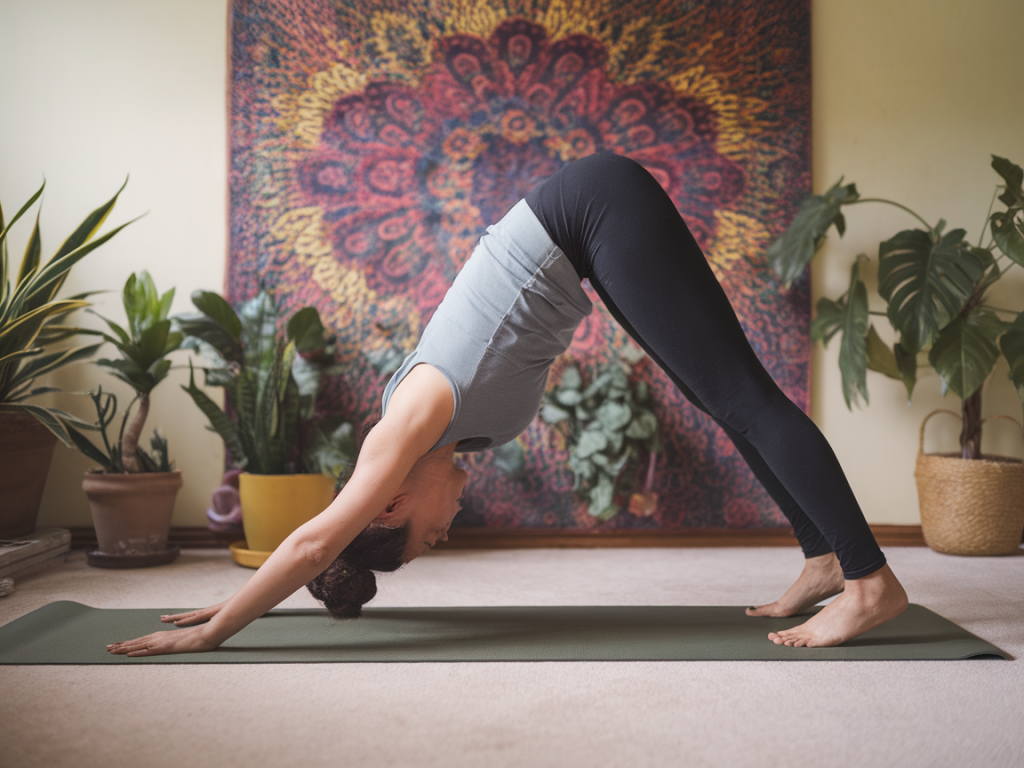
I built this 20-minute at-home strength session because I needed something short, focused, and actually effective for my chronically tight hips and lower back. I wanted a routine I could do between meetings or after a long day of sitting—one that blends mobility, strength, and gentle release so my body feels stable and calm. Below is the session I use, why each piece matters, and options to scale up or down. No fancy equipment required; a mat, a resistance band (mini loop), and a light dumbbell or kettlebell are helpful but optional.
Why this structure works
When hips and lower back feel tight, the solution isn't only stretching. You need mobility to restore range, strength to support alignment, and some soft-tissue care to ease tension. This routine follows a simple flow: warm-up + mobility + targeted strengthening + integration and breathing. Each block has clear objectives so the 20 minutes you invest delivers both short-term relief and longer-term resilience.
Session breakdown (20 minutes)
| Segment | Duration | Focus |
| Gentle warm-up | 3 min | Increase circulation, wake up movement patterns |
| Dynamic hip & spine mobility | 5 min | Restore range and movement coordination |
| Strength block (2 rounds) | 9 min (4.5 min each round) | Build stability in glutes, core, and posterior chain |
| Soft reset + breathing | 3 min | Release residual tension, calm nervous system |
What you'll need (optional)
Minimal setup:
A mat or soft surfaceA mini loop band (for glute activation) — brands I like: Fit Simplify or WOD NationA light dumbbell or kettlebell (4–12 kg / 9–26 lb) if you want added loadA foam roller or massage ball (TriggerPoint or a lacrosse ball) for the soft-tissue resetWarm-up — 3 minutes
This wakes up the nervous system and primes the hips and lower back.
30 seconds marching in place with exaggerated hip drive — lift knees and reach opposite arm. Focus on gentle hip flexion.30 seconds open-close leg swings — hold onto a chair, swing one leg forward-to-back then do 15 seconds side-to-side. Light and controlled.1 minute cat-cow flow on hands and knees — inhaling into belly drop (cow), exhaling into rounding (cat). Move with your breath to mobilize the spine.30 seconds glute contractions — stand and squeeze glutes for 3–5 seconds, release. This primes the posterior chain.Dynamic hip & spine mobility — 5 minutes
Move smoothly through ranges your hips and spine need to be comfortable. Perform each exercise for about 45–60 seconds, alternating sides where appropriate.
World's Greatest Stretch (lunge with thoracic rotation): Step into a lunge, drop the elbow inside the front foot, then reach the arm up and rotate towards the ceiling. This hits hip flexors, hamstrings, and thoracic mobility.90/90 hip transitions: Sit on the floor with knees at 90 degrees in front and behind you. Rock and rotate from the rear hip to the front hip, moving through internal/external rotation. Keep it slow and controlled.Quadruped hip circles: On hands and knees, lift one knee and make small circles; reverse direction after 30 seconds. This helps hip capsule mobility and proprioception.Strength block — 9 minutes (2 rounds, ~4.5 min per round)
This is the heart of the session. Focus on quality: controlled tempo, full breath, and alignment. Rest 30–45 seconds between rounds if needed.
Glute bridge with band (12–15 reps): Place a mini band above knees, lie on your back, feet hip-width. Drive hips up, squeeze glutes at the top, press knees slightly outward against the band. Slow eccentric descent. Why: builds posterior chain strength and pelvic stability.Split squat (8–10 reps each side): Elevate back foot slightly on a step or low box if available. Keep torso upright, drive through front heel. Add a dumbbell for progression. Why: loads the glutes and quads in a functional single-leg pattern that reduces compensatory lower back strain.Bird-dog with hold (8–10 reps each side): From hands-and-knees, extend opposite arm and leg, hold 2–3 seconds with a strong brace through the core. Why: improves lumbar stability and cross-body coordination.Dead bug (8–12 reps each side): Lie on your back, knees in tabletop. Slowly extend one leg and opposite arm while keeping lower back neutral. Progress by adding light weight to hands or ankle weights. Why: reinforces core control without spinal flexion.Soft reset + breathing — 3 minutes
Finish with gentle release for the tissues and a calming breath pattern to down-regulate the nervous system.
Foam roll upper glutes and lateral hip for 60 seconds each side (or use a massage ball in the piriformis area). Move slowly and breathe; stop on tender spots and breathe into them for 20–30 seconds.Psoas release stretch (kneeling lunge with posterior pelvic tilt): In a half-kneeling position, tuck your pelvis slightly and hinge forward from the hips until you feel a gentle stretch in the front of the hip. Hold 45–60 seconds each side.Box breathing lying on back: Inhale 4 seconds, hold 4, exhale 4, hold 4. Repeat for 1–2 minutes. This helps relax muscle tone in the lower back and hips.Modifications and progressions
If you’re new to movement or currently in pain, make these adjustments:
Reduce range and speed — move slower and stop before any sharp pain.Skip loaded split squats; do reverse lunges or step-ups with bodyweight.Swap glute bridges for standing hip hinges if lying down increases discomfort.To progress:
Add weight to bridges or split squats.Increase hold times on bird-dogs and bridges.Do 3 rounds instead of 2, keeping total time to ~25–30 minutes when ready.How often?
I do this routine 3–5 times per week when my hips are acting up, and 2–3 times as maintenance. The key is consistency—short, targeted sessions every other day build stability faster than occasional long workouts.
Tips from my practice
Pair this routine with movement breaks if you sit for long periods—stand, walk, or do a 2-minute version of the warm-up each hour.Mind your screen posture—small tweaks (monitor at eye level, lumbar roll) reduce daily strain on the lower back.If pain is persistent or radiates down the leg, check with a clinician. This routine is safe for mechanical tightness and mild pain but not for acute nerve compression without clearance.Try this 20-minute sequence for two weeks and notice how your hips and lower back respond. Adjust tempo and load, listen to your body, and keep the focus on steady, sustainable improvement. If something feels especially helpful, keep it in your rotation and build from there.