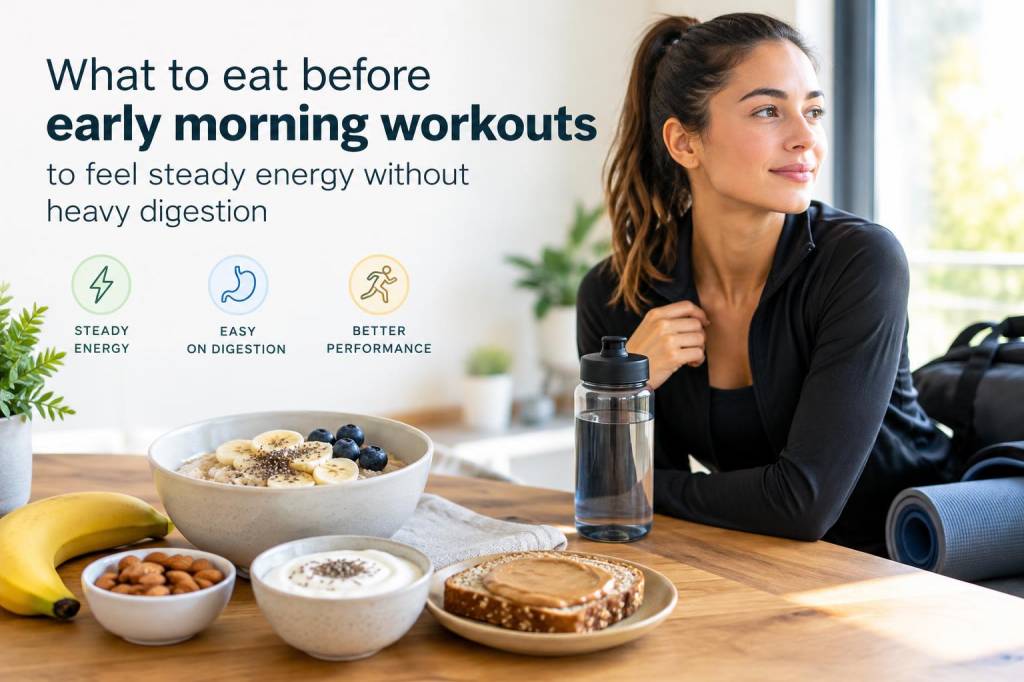
I used to think early-morning training had to begin with a fully stocked stomach if I wanted energy, but I learned that a heavy meal often works against me. When I eat too much before a dawn session, I feel sluggish, distracted, or slightly nauseous. When I eat too little, I can feel flat, shaky, or mentally foggy. Over time, I found a middle path: a small, easy-to-digest pre-workout bite that gives me steady fuel without sitting like a stone in my stomach.
For early sessions, my goal is not fullness. My goal is stable energy. I want enough carbohydrate to support movement, a little protein if I can tolerate it, and very little fat or fiber right before exercise. That combination helps me start with a calm stomach and a more reliable sense of power once I begin moving. I also pay attention to timing, because what I eat five minutes before training is very different from what I eat one hour before.
What my body usually needs before a dawn workout
Before an early-morning workout, I usually think in terms of three things: fuel, comfort, and timing. Most sessions do not require a full breakfast. A light snack is often enough, especially if I am doing a run, a strength circuit, a cycling session, or mobility work lasting under an hour. If I am planning a longer or harder workout, I may need a bit more carbohydrate and a slightly larger portion.
I usually avoid foods that are high in fat, heavy in fiber, or overly rich right before exercise. Those foods can slow digestion and create discomfort when I start moving. I also avoid experimenting with anything new on a workout morning. If a food has not already proven itself on a calm, low-stakes day, I do not introduce it before training.
For me, the sweet spot is simple: a small amount of carbohydrate, a little liquid if needed, and enough time for digestion. That approach gives me a steadier start than training completely empty, especially when I wake up feeling a bit depleted.
Foods that usually sit well for me
When I want something light before an early session, I reach for easy-to-digest foods with quick energy. I prefer options that are familiar, mild, and simple. A few of my go-to choices are:
These foods work for me because they are easy to digest and provide carbohydrate without overwhelming my system. A banana, for example, is my classic option when I need something quick. It feels gentle, portable, and predictable. Toast with honey is another reliable choice when I want a little sweetness and fast fuel.
If I wake up with almost no appetite, I sometimes keep it even simpler: half a banana, a few sips of water, and then I eat more after training. That is enough for many shorter workouts. If I feel especially drained, I increase the portion a little, but I still keep it modest.
What I avoid right before training
Experience taught me that not every healthy food is a good pre-workout food. Some options are nutritious but not ideal immediately before exercise. I tend to avoid:
These foods can be great at other times of day, but before early movement they often slow me down. A smoothie packed with many ingredients may sound healthy, yet it can feel too dense first thing in the morning. I want quick access to energy, not a digestive project.
I also stay cautious with large amounts of coffee on an empty stomach. For me, caffeine can be useful, but too much too early can leave me jittery or mildly unsettled. If I want coffee, I usually pair it with a small snack, especially if I am about to do intervals or a strength workout.
Timing matters as much as food choice
The best pre-workout food depends on how much time I have before training. My approach changes based on the clock, because digestion needs space.
| Time before workout | What I usually eat | Why it works for me |
|---|---|---|
| 10 to 15 minutes | Half a banana, a few dates, or a small drink with carbohydrate | Fast energy with very little digestive load |
| 30 to 45 minutes | Banana with a little nut butter, toast with honey, or rice cakes with fruit spread | Enough time for a light snack to settle |
| 60 to 90 minutes | Small oats bowl, yogurt with fruit, or toast plus fruit | More room for a slightly fuller snack |
| 2 hours or more | More complete breakfast with carbohydrate, protein, and a little fat | Digestive time allows a fuller meal |
When I train very early, I often do not have a full hour to spare. In that case, I keep food simple and lean on timing discipline. If I eat too close to a hard workout, even a healthy snack can feel uncomfortable. If I leave too much time and do not eat enough, I can lose that first burst of energy before I warm up. I try to land somewhere in the middle.
What I choose for different workout styles
My food choice changes depending on the session. A gentle mobility practice does not require the same fuel as hill repeats or a heavy leg session. I match the snack to the work.
For lower-intensity movement, I can sometimes train with only a small bite or even just a hot drink and water. But for strength work, intervals, or anything that will push my heart rate higher, I like a little more carbohydrate first. That extra fuel helps me stay focused and reduces the chance that I feel flat halfway through.
If I know I am doing strength training, I usually want something that supports effort without feeling bulky. A banana, toast, or a small oat portion works well. If I am going for a run, especially a faster one, I keep fiber low and choose something very easy on my stomach. If I am doing yoga or mobility, I may need less food overall, but I still like a small snack if I woke up hungry.
My practical pre-workout combinations
These are the combinations I come back to most often because they are simple, cheap, and easy to repeat during a busy week:
When I want a bit more support, I add protein after training instead of before. That keeps my pre-workout snack lighter and easier to digest. For example, I may eat toast with honey before a workout, then have eggs, yogurt, or a protein-rich meal afterward.
I also use liquid fuel carefully. A small smoothie can work if it is simple: fruit, liquid, and maybe a little yogurt. Once I start adding chia, nut butter, oats, and large amounts of greens, it becomes more of a meal than a snack. That is not what I want at dawn. I want something that feels almost effortless.
Signals I pay attention to in my own body
I have learned to listen closely to my body rather than follow a rigid rule. If I feel sleepy, drained, or a little shaky when I wake up, I usually need some carbohydrate before training. If I feel calm and energized already, I may only need water and a very small bite. If my stomach feels sensitive, I simplify even more.
I also notice how my energy behaves in the first ten minutes of exercise. If I start well but fade quickly, that usually tells me I under-fueled. If I feel heavy, bloated, or distracted, that usually tells me I ate too much or chose something too rich. Those signals help me adjust the next time.
Over time, I have found that consistency matters more than perfection. I do not need a complicated breakfast routine. I need a repeatable one that supports steady energy and does not interfere with movement. For me, that often means eating a small, familiar snack, keeping fluids nearby, and saving larger meals for after the session.
A simple structure I return to on busy mornings
On rushed mornings, I use a very simple order: wake up, drink a little water, eat a small carbohydrate-focused snack, and start warm-up. I do not overthink it. I keep breakfast light enough that I can move comfortably, but substantial enough that I do not feel empty. That balance has made early training feel much more sustainable.
If I have extra time, I may add a second small layer of fuel, such as another slice of toast or a little yogurt after the first snack. If I have less time, I choose the smallest effective option and trust my post-workout meal to do the rest. That flexibility helps me stay consistent without forcing my body into a pattern that does not feel good.
What I eat before an early-morning workout is never about chasing a perfect formula. It is about creating a steady start, protecting digestion, and giving myself enough energy to move with focus. When I keep that intention in mind, I feel more prepared, more settled, and much more willing to show up before sunrise.