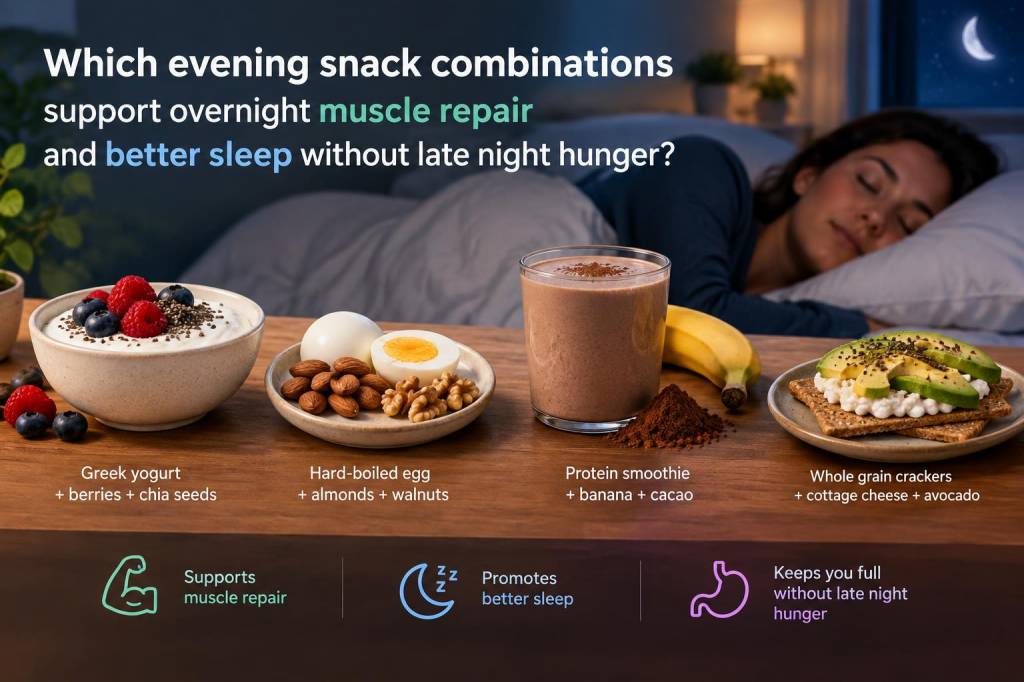
When I think about evening snacking, I do not see it as a weakness or a “bad habit.” I see it as a practical moment to support recovery, steady blood sugar, and a calmer night. If I finish dinner early, train late, or simply wake up hungry at midnight, a thoughtful snack can make a real difference. What matters is not eating less at night at all costs, but choosing a combination that helps my body repair muscle tissue while also helping me settle into sleep without waking up hungry.
For me, the sweet spot is usually a mix of protein, a small amount of carbohydrate, and sometimes a little fat. Protein supports overnight muscle repair. Carbohydrate can help with comfort, satiety, and the release of sleep-related hormones. A modest amount of fat can slow digestion just enough to keep me full longer, but too much fat can feel heavy and make sleep less comfortable. I prefer snacks that are satisfying without being large or rich, because I want my body to rest, not work overtime.
Why evening snacks can matter for recovery
If I have done strength training, a long walk, a demanding workday, or even a stressful day with little appetite earlier on, I often need a small recovery window before bed. Overnight is when the body does a lot of repair work, and that includes muscle protein synthesis. I do not need a huge meal to support that process. A targeted snack with enough protein can be enough to keep my body supplied with amino acids while I sleep.
I also pay attention to hunger itself. If I go to bed too hungry, I tend to fall asleep less easily, wake up more often, and feel less rested the next morning. That does not mean every evening needs food, but it does mean I should respect genuine hunger rather than trying to ignore it. A snack that is planned, balanced, and easy to digest often works far better than lying awake thinking about food.
The combinations I reach for most often
Over time, I have found that certain pairings work especially well. I like them because they are simple, quick, and realistic on a busy night. They also avoid the sugar spike-and-crash pattern that can leave me hungry again too soon.
- Greek yogurt and berries: This is one of my most reliable options. Greek yogurt gives me protein, while berries add a little carbohydrate, fiber, and freshness. I sometimes add a spoonful of oats or a sprinkle of chia seeds if I need more staying power.
- Cottage cheese and kiwi: Cottage cheese is high in casein-rich protein, which many people like in the evening because it digests slowly. Kiwi adds gentle sweetness and a light carbohydrate boost. I find this combination especially calming when I want something cool and simple.
- Toast with peanut butter and banana: When I want a more comforting snack, I choose whole-grain toast with a thin layer of peanut butter and a few banana slices. This gives me carbohydrate, protein, and a little fat without feeling too heavy.
- Oatmeal with milk and cinnamon: Warm oats can feel soothing before bed. I cook them with milk or a fortified plant milk, then add cinnamon and a few nuts or seeds. This works well when I want something more filling after an evening workout.
- Turkey or tofu wrap: If I am truly hungry, I sometimes want a mini savory snack rather than something sweet. A small wrap with turkey, tofu, or hummus and a soft tortilla can be very satisfying and easy to digest.
- Milk or soy milk with whole-grain crackers: This is a very simple option, but it works. Milk or soy milk adds protein, and crackers give a small amount of carbohydrate that helps me feel settled.
What makes a snack support sleep rather than disturb it
I have learned that not every recovery snack is sleep-friendly. A very large portion, a lot of fried food, an excess of spice, or a dessert that is mostly sugar can leave me feeling too full, too warm, or too energized. I do better when I keep portions moderate and choose foods that are familiar to my digestion.
I also avoid making my evening snack too close to lights-out if I can help it. I usually feel better when I give myself about 30 to 90 minutes before bed, depending on the size of the snack. A smaller snack, like yogurt or fruit with milk, can sit comfortably even later in the evening. A more substantial mini-meal, like toast with peanut butter or a small wrap, often feels better a little earlier.
One thing I pay close attention to is caffeine. It sounds obvious, but even some chocolate snacks or drinks can keep me alert longer than I want. If I want a sweet evening option, I choose something that does not come with a hidden stimulant. I also keep alcohol out of the equation because it may make me sleepy at first, but it usually disrupts sleep quality later in the night.
How I build a balanced evening snack
When I am deciding what to eat, I think in a very simple way: protein first, then add comfort. That usually means I start by asking myself whether I need a dairy, soy, egg, poultry, fish, or legume-based source of protein. Then I add a small fruit portion, grain, or other carbohydrate if I need more fullness. If the snack seems too dry, I include a little fat from nuts, seeds, nut butter, or avocado.
Here is a simple structure I often use:
| Need | Snack idea | Why it works for me |
|---|---|---|
| Post-workout recovery | Greek yogurt with oats and berries | Protein for repair, carbohydrate for refill, easy to digest |
| Comfort and fullness | Toast with nut butter and banana | Satisfying texture, steady energy, not too heavy |
| Very light appetite | Kiwi with cottage cheese | Small portion, protein support, sleep-friendly simplicity |
| Salty craving | Hummus with crackers | Legume protein, light crunch, easy evening option |
| Warm and soothing | Oatmeal made with milk and cinnamon | Comforting, filling, gentle on the stomach |
Portion size matters more than perfection
I do not aim for a perfect formula every night. I aim for a portion that feels calm, supportive, and satisfying. If I have had a large dinner, I may only want a small yogurt or a few spoonfuls of cottage cheese with fruit. If I trained hard or skipped a proper afternoon meal, I may need something closer to a mini-meal. Listening to my appetite has been far more useful than following a rigid rule.
As a practical reference, I usually want enough protein to make a difference, but not so much food that my stomach feels overloaded. Many people feel well with a snack that includes around 15 to 25 grams of protein, though individual needs vary. I adjust based on my training load, hunger, and how my body tends to feel overnight. If I notice I am waking up hungry, I make the snack a little more substantial. If I feel sluggish or too full at bedtime, I make it lighter.
Small details that improve overnight comfort
I have also found that the environment around the snack matters. If I eat while rushing, scrolling, or standing in the kitchen, I tend to feel less satisfied. If I sit down, eat slowly, and let my body notice the food, I usually need less and feel more settled. That calm moment can be part of recovery too.
Hydration matters, but I avoid drinking a huge amount right before bed because it can send me to the bathroom during the night. I prefer to sip water earlier in the evening and keep a small glass nearby if I need it. I also try to keep my snack simple enough that digestion feels easy. A long ingredient list is not necessary for good sleep or muscle support.
If I want to make evening snacking more supportive, I ask myself three questions: Am I actually hungry? Did I train or exert myself today? Will this food help me sleep comfortably? When I answer honestly, the right choice is usually clear.
Evening snack ideas I return to often
- Plain Greek yogurt with blueberries and a small spoon of oats
- Cottage cheese with sliced kiwi and a pinch of cinnamon
- Whole-grain toast with peanut butter and banana
- Warm oatmeal with milk and chopped walnuts
- Hummus with soft crackers and cucumber slices
- Small wrap with turkey, lettuce, and a little avocado
- Soy milk with a few oat biscuits
- Ricotta with strawberries and a drizzle of honey
What I like most about these combinations is that they are flexible. I can keep them sweet or savory, light or more filling, depending on what my evening actually needs. When I choose well, I do not just stop hunger for the night. I wake up feeling a little more restored, a little less scattered, and more ready for another day of training, work, and everyday life.