That mid-afternoon wall hits me like a foggy weight some days — eyes heavy, focus fading, and the temptation to reach for another coffee or doom-scroll for a quick lift. Over the years I’ve experimented with dozens of fixes and landed on one simple habit that reliably helps: a 10-minute ritual that combines a small protein-rich snack with mindful breathing. It’s quick, portable, and doable whether I’m at a desk, in a café, or in the park. Below I’ll share exactly how I do it, why it works, and practical variations so you can adapt it to your own rhythm.
Why pair protein with breathing?
Protein stabilises energy. A small, protein-focused snack helps steady blood sugar and gives your brain a steady supply of amino acids, which can improve alertness without the sugar crash that comes from high-carb treats. Think Greek yogurt, a hard-boiled egg, or a handful of nuts — 10–20 grams of protein is often enough to make a difference.
Breathing resets the nervous system. Simple, intentional breathing lowers stress hormones, reduces the fight-or-flight response, and improves oxygen flow to the brain. That mental reset reduces overwhelm and boosts clarity. Combining both gives you a physical and physiological nudge back into a productive groove.
What the 10-minute ritual looks like
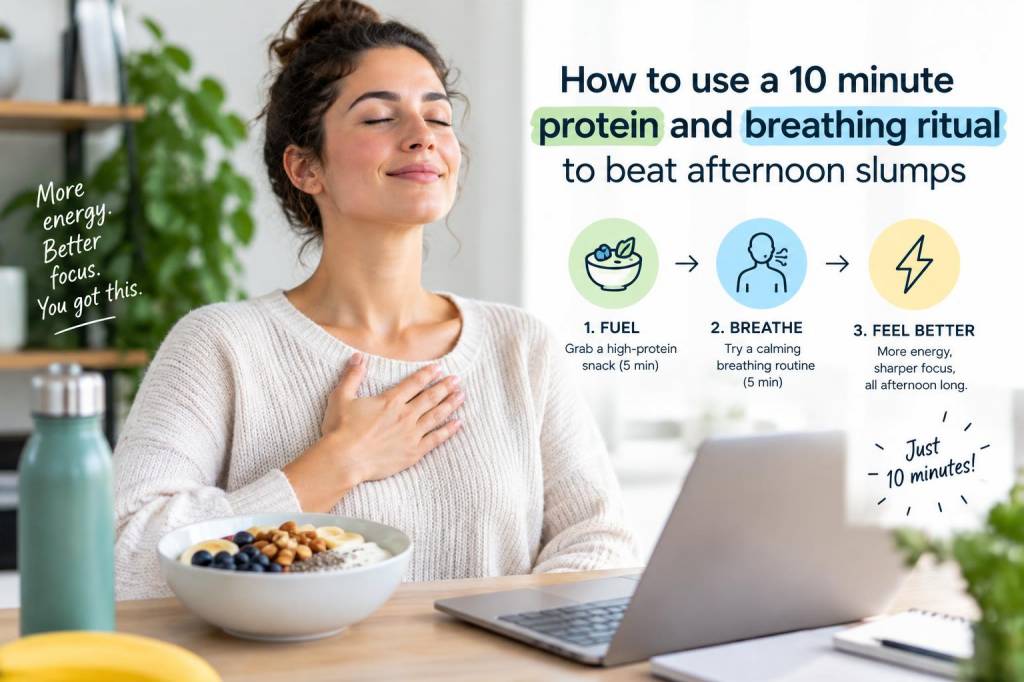
Here’s the structure I use. It’s easy to remember and flexible around real life:
- Minute 0–2: Pause, put away screens, wash/sanitise hands if needed. Pick up your snack and a glass of water.
- Minute 2–6: Eat slowly and mindfully — focus on taste and texture. Put your phone face down.
- Minute 6–10: Do a guided breathing sequence (instructions below). Finish with a sip of water and a quick body stretch.
Simple breathing sequence (4-6-8-ish)
I often use a 4-6-8-style pattern because it’s easy to follow without a timer app. Do this seated with feet on the floor and hands resting on your thighs:
- Inhale gently through the nose for 4 counts, feeling the belly expand.
- Hold the breath for 6 counts (adjust to comfort — if 6 is too long, hold for 3–4).
- Exhale slowly through the mouth for 8 counts, letting the shoulders drop.
- Repeat for 3–4 cycles, or for about 3–4 minutes total.
This sequence calms the nervous system while increasing oxygenation. If you prefer, use a guided 3-minute audio (I’ll sometimes use shorter breath meditations from apps like Insight Timer or the Calm app). No app? Count quietly in your head — that’s enough.
Snack ideas that fit the 10-minute window
Choose something you enjoy and that’s easy to prepare or carry. Below is a quick table with portable options and approximate protein content.
| Snack | Portion | Approx. protein |
|---|---|---|
| Greek yogurt | 150g (single pot) | 12–15g |
| Hard-boiled egg | 1–2 eggs | 6–12g |
| Cottage cheese + berries | 100–150g | 10–14g |
| Nut butter on apple | 1 tbsp almond/peanut + 1 small apple | 4–7g |
| Protein bar (clean ingredient) | 1 bar (e.g., RXBAR, Huel) | 10–20g |
| Protein shake (collagen or whey) | 1 scoop with water | 10–20g |
How I pick what to eat
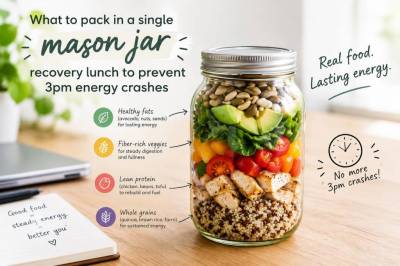
I aim for a balance: protein plus a little fibre or healthy fat to slow digestion and keep me satisfied. If I’m at home, I favour Greek yogurt with a sprinkle of seeds and a few berries. On busy days or when I’m at my desk, a boiled egg and an apple or a clean protein bar works well. If you’re sensitive to dairy, try a plant-based protein shake or a tin of tuna with cucumber slices.
Office-friendly variations
- If you can’t heat anything: keep single-serve cottage cheese pots, nut butter sachets, or tins of salmon in your bag or desk drawer.
- If you’re concerned about smell: grab a protein bar or a fermented oat pot (no strong smell) and step outside for your breathing routine.
- If you’re short on time: chew slowly while you walk for the first 4 minutes, then stop and do two minutes of breath work at your desk.
When to avoid this ritual
If you’re experiencing severe fatigue that’s unexplained or accompanied by other symptoms (rapid weight change, dizziness, sleep disturbances), check in with a healthcare professional. This ritual is a supportive habit for everyday slumps, not a substitute for medical care.
Troubleshooting: when it doesn’t work
Sometimes the ritual doesn’t shake the slump — here’s what I try next:
- I’m still foggy: add a brisk 3-minute movement break — march on the spot, do a few squats, or walk around the block.
- I overdid the snack: reduce portion size next time; too many calories can make you sleepy.
- I’m jittery after coffee: skip additional caffeine and focus on water and breathing instead.
Tools I keep handy
I keep a small kit in my bag and at my desk: a reusable spoon, a few resealable pots, a couple of boiled eggs, a tub of unsweetened Greek yogurt at home, and one or two favourite protein bars for emergencies. For breathing, I sometimes use a subtle vibration timer on my watch or a short guided clip — but mostly I just count quietly. Practical, small investments make the ritual easy to stick with.
How to make it a habit
Pair the ritual with an existing cue: right after your morning meeting, after lunch dishes, or at 3:00 p.m. on your calendar. Keep the snack prepared or accessible, and treat the breathing as a non-negotiable mini-break — I tell myself it’s part of my work, not a perk. Over two weeks you’ll start to notice fewer energy crashes and better focus.
If you try this, I’d love to hear what snacks and breathing patterns work for you. Small rituals can add up to meaningful change — and that steady approach is exactly what I aim to share at Phnxfitness Co (https://www.phnxfitness.co.uk) for everyday renewal and resilience.