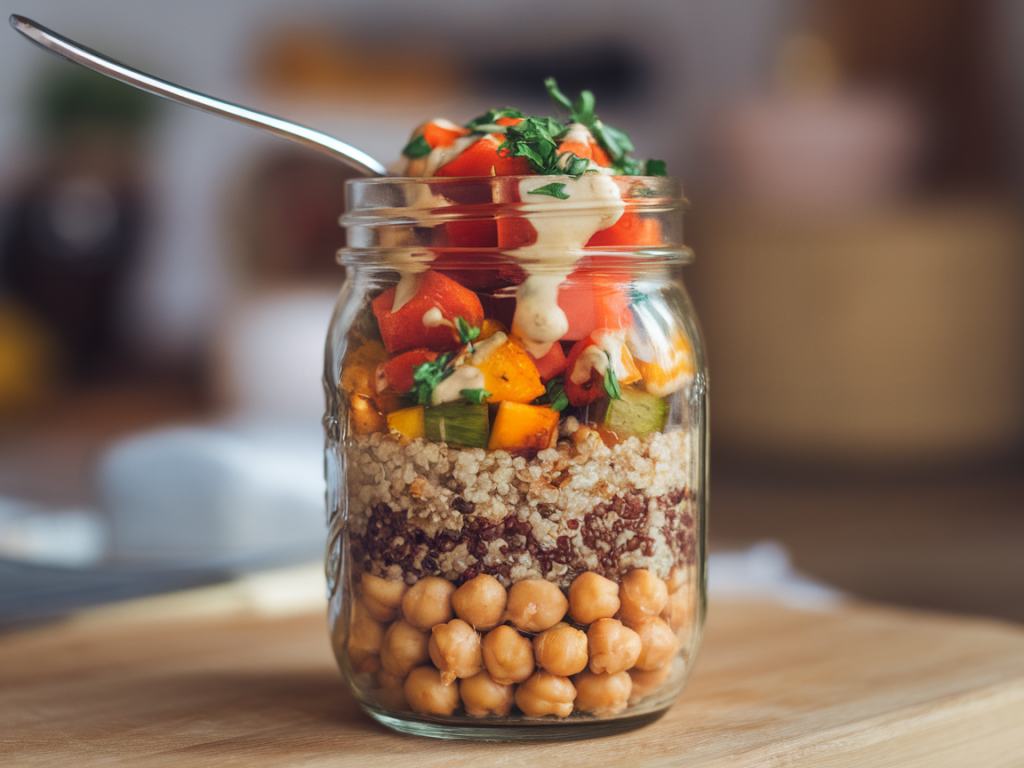
I’ve learned the hard way that a mid-afternoon energy crash usually comes from one or more missing pieces at lunch: too many refined carbs, too little protein, not enough fat or fiber, or a meal that’s simply boring and uninspiring. Packing a single mason jar lunch has become my go-to solution for a satisfying, balanced meal that’s easy to transport, looks lovely, and — most importantly — keeps me steady until dinner. Below I share exactly what I pack, portion and macro guidance you can follow, and simple reheating and assembly tips so your jar tastes as good at 3pm as it did at noon.
Why a mason jar lunch works to prevent 3pm crashes
Mason jars are practical: they’re leak-proof, portable, and create neat layers so ingredients stay fresh. But beyond practicality, the mason jar encourages balance. You’re compelled to think in layers — greens, veg, proteins, carbs, and fats — instead of relying on a single carb-heavy item. When I pack intentionally, my blood sugar stays more even, my focus improves, and I don’t reach for sugary snacks mid-afternoon.
I also find that an attractive lunch feels more satisfying. Seeing colorful ingredients through glass makes me excited to eat a proper meal, which helps me pause, slow down, and actually digest — another factor that supports sustained energy.
The components I always include
Every jar I build includes five elements. They may shift around depending on taste or season, but the balance is constant.
Portions and simple macro targets
I aim for a balanced plate that roughly follows these macro targets for a single mason jar lunch (about 500–650 kcal depending on cooking method and exact portions):
| Component | Portion (approx) | Macros (approx) |
|---|---|---|
| Vegetables | 1–2 cups | 5–10 g carbs, 3–5 g fiber |
| Protein | 3–5 oz (85–140 g) or ½–1 cup legumes | 20–30 g protein |
| Whole grains / starchy veg | ½–1 cup cooked | 20–40 g carbs |
| Healthy fats | 1–2 tbsp (olive oil, tahini) or ¼ avocado or 1 oz nuts | 8–20 g fat |
| Total (typical) | One mason jar (500–650 kcal) | 30–40 g protein, 35–60 g carbs, 15–25 g fat |
These are flexible targets — if you’re smaller, more sedentary, or trying to lose weight, scale the portions down; if you’re active or under-fueling, increase the grain or protein portion. The key is to include all three macronutrients plus fiber so digestion and blood sugar stay steady.
Example mason jar formulas I love
Here are some combos I rotate through. All fit comfortably into a standard 1-litre mason jar; use smaller jars if you want smaller portions.
Layering & assembly tips
How you layer matters if you want your jar to stay fresh for several hours:
Reheating tips (microwave & stovetop)
If your jar contains components best eaten warm — grains, roasted veg, cooked proteins — you can reheat safely and enjoyably.
Note: If you must reheat in the jar itself, use a glass jar labeled microwave-safe (e.g., many Ball jars). Remove the metal lid and loosen the screw band to prevent pressure build-up. I prefer transferring to a bowl whenever possible because the jar can be awkward to handle and may retain heat unevenly.
Meal-prep and storage best practices
I usually make components for three to four jars at once on Sunday:
For dressings, I keep a small squeeze bottle or mini jar in the fridge so I can add fresh acid at lunchtime. Brands I often reach for: Biona tahini, Good & Green avocado oil, or a splash of lemon juice and a drizzle of Rapunzel olive oil do the trick.
Small switches to make a big difference
To reduce the risk of a 3pm crash, try these tweaks:
Try building one jar this week with the proportions above. Tweak the ingredients until you find your favorite combo — I promise it’ll change your afternoons. If you want, tell me what ingredients you like and I’ll suggest a tailored jar recipe.