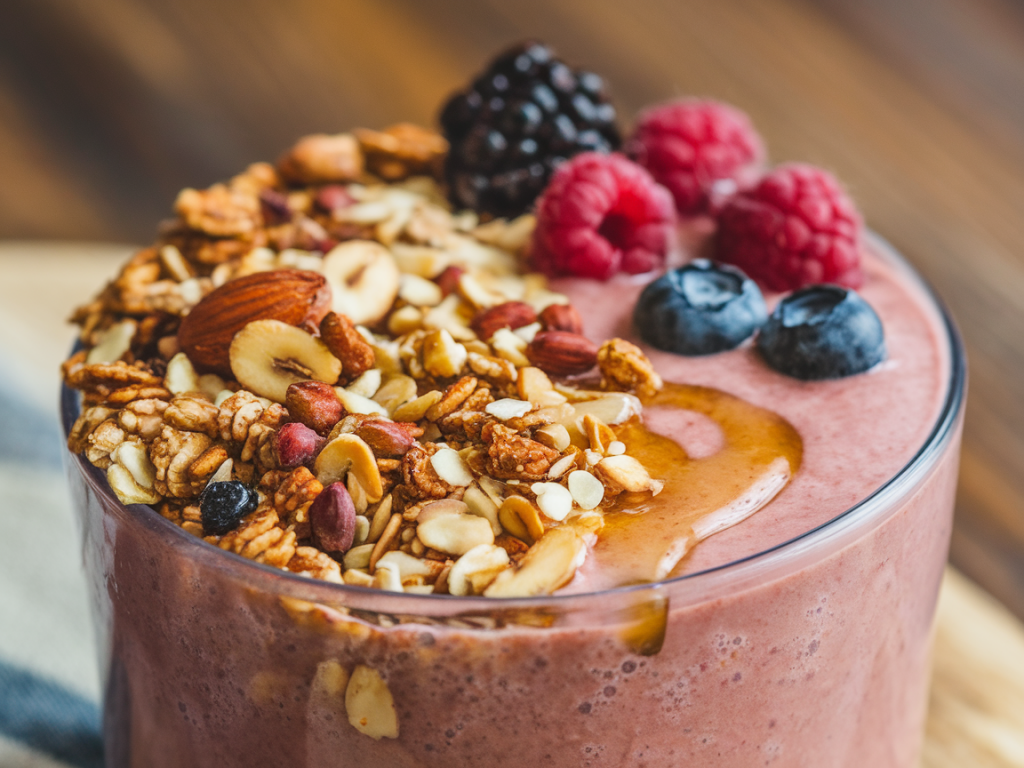
I make a lot of smoothie bowls. They’re my reliable, low-fuss morning ritual when I want to feel focused, steady, and kind to my digestion. Over the years I’ve refined a few go-to templates that combine texture, slow-burning energy, gut-friendly ingredients, and flavours that feel like a hug. Below I share the bowls I reach for most often, why each ingredient is there, practical swaps, and troubleshooting tips so you can make them work for your life—whether you have five minutes or you like a little weekend ritual.
Why a smoothie bowl for morning focus and digestion?
Smoothie bowls are more than pretty breakfasts. When I plan them well they deliver:
Core building blocks I always include
I think of each bowl in 4 layers: base (frozen fruit + liquid), bulk (oats or veg), protein & fat (yoghurt, nut butter), and toppings (seeds, fresh fruit, spice). Here’s why each matters:
My go-to recipes
1) Sunrise Focus Bowl (for concentration & steady energy)
Why it works: Oats + nut butter + yoghurt combine to slow glucose release. Berries provide antioxidants and low-glycaemic sweetness. Cinnamon adds warmth and may help blood sugar regulation.
2) Calm Gut Green Bowl (for digestion and anti-inflammatory support)
Why it works: Kefir brings probiotics for microbiome support, ginger soothes the gut and reduces bloating, and soluble fibre (oats/psyllium) helps regulate transit time.
3) Power-Up Protein Bowl (post-work or longer mornings)
Quick swaps and a handy ingredient table
If you don’t have something on hand, these swaps keep the nutritional purpose intact:
| Ingredient | Replace with |
| Greek yoghurt | Plant-based yoghurts (Alpro, Coconut yoghurt) or kefir |
| Rolled oats | Cooked quinoa or buckwheat groats |
| Frozen banana | Cooked sweet potato (cool first) for creaminess |
| Nut butter | Seed butter (sunflower, tahini) if nut-free |
| Protein powder | Cottage cheese blended, hemp seeds + yoghurt |
Common questions I get and how I answer them
Will smoothie bowls spike my blood sugar?
They can if they’re mostly fruit and juice. That’s why I pair fruit with protein, fat and fibre (yoghurt, nut butter, oats). These slow digestion and blunt rapid sugar rises. If you’re diabetic or sensitive, choose berries, add protein, and keep portion sizes moderate.
Can I make them ahead?
Yes. I’ll blend the base and store it in a jar in the fridge for up to 24 hours—add a splash of milk and stir before eating. For longer storage freeze single-serve pouches of pre-measured frozen fruit/oats and blend with fresh yoghurt in the morning. Toppings stay best added just before eating to keep crunch.
What about food sensitivities?
Substitute dairy yoghurt for coconut or soy alternatives, use seed butters if nut allergies, and avoid psyllium if it causes discomfort. Start small with probiotic foods (kefir, live yoghurt) if you’re new to them—some people experience temporary bloating as their microbiome adapts.
How do I keep the bowl filling without too many calories?
Focus on volume from low-calorie, high-fibre additions: leafy greens, cauliflower, zucchini, and berries. Protein and a small amount of healthy fat (half to one tablespoon) add satiety without going overboard.
Little habits that make a big difference
If you try one of these bowls, tweak one thing and observe how you feel for three mornings—energy levels, digestion, and concentration. Then adapt. I love hearing about reader experiments—what worked, what needed changing—so feel free to drop a note on the blog or tag Phnxfitness Co on Instagram with your bowl photos.