I love one-bowl dinners because they feel like a small, nourishing ritual at the end of a busy day. They’re practical, spoonable, and—when composed thoughtfully—they can help refill muscle glycogen stores and support faster evening recovery. Below I share why glycogen matters, the simple macronutrient rules I use, and a handful of bowl ideas and recipes you can mix and match to fit time, taste, and pantry limits.
Why glycogen matters for evening recovery
Glycogen is the stored form of carbohydrates in your muscles and liver. After a workout or a long day of activity, glycogen gets depleted. If you want better performance the next day, less muscle soreness, and more energy, replenishing glycogen in the hours after activity—or before bed if you’re training in the evening—makes a real difference.
In plain terms: eating the right amount of carbs alongside protein after exercise helps your muscles restock fuel and begin repairing. The added benefits? Improved sleep quality for many people, reduced overnight muscle breakdown, and a steadier morning energy level.
Simple macronutrient guide I follow
- Carbs: Aim for 0.5–0.7 g/kg bodyweight in the first 1–2 hours after moderate-to-intense exercise. For ease, I often target 30–60 g of carbs in a one-bowl dinner after an evening session.
- Protein: Include 20–30 g of high-quality protein to stimulate muscle repair. Think: poultry, fish, tofu, tempeh, Greek yogurt, or cottage cheese.
- Healthy fats: Keep fats moderate at dinner—about 10–20 g—so they don’t slow digestion too much if glycogen replenishment is the goal. Fats support satiety and nutrient absorption when balanced.
- Veg & fiber: Add vegetables for micronutrients and to help with recovery (especially leafy greens, bell peppers, and cruciferous veggies).
What I mean by a “recovery” one-bowl
A recovery bowl for me typically contains:
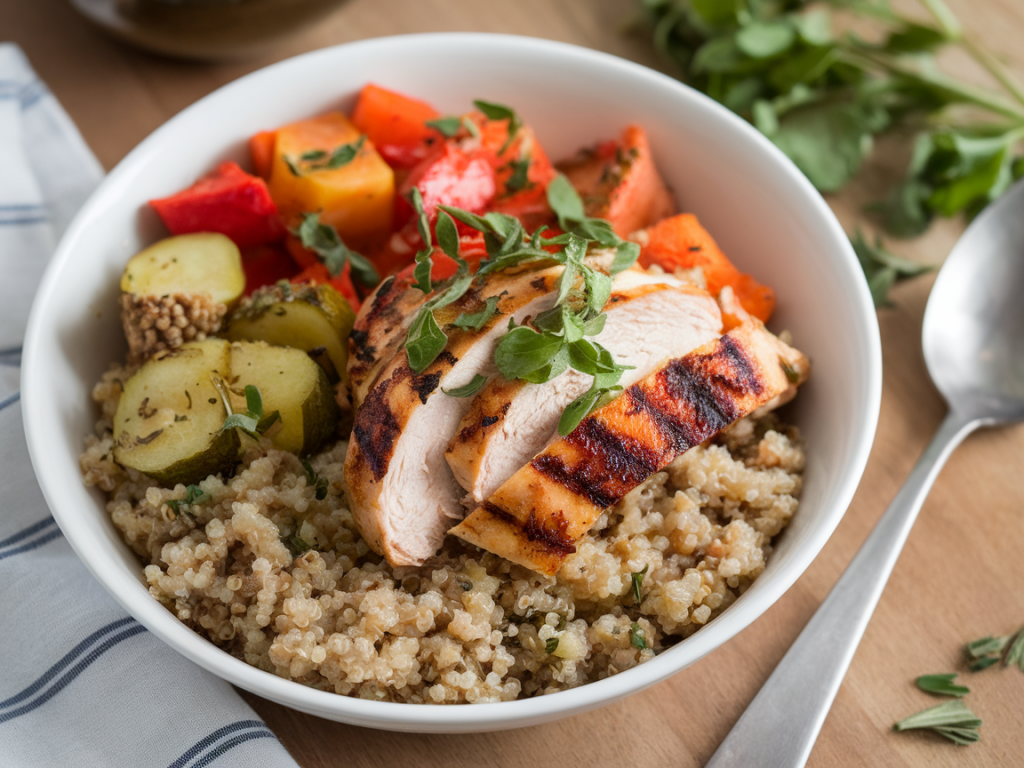
- a carbohydrate base (rice, quinoa, sweet potato, soba noodles, or even fruit)
- protein topping (grilled salmon, chickpeas, shredded chicken, or a poached egg)
- a small drizzle of healthy fat (olive oil, tahini, or avocado)
- quick pickles or fresh veg for texture and vitamins
- a finishing splash of something salty or umami (soy sauce, miso, lemon) to enhance satisfaction
Easy one-bowl templates I rotate
These templates work for evenings when I want to recover quickly but don’t want to spend time cooking elaborate meals.
- Sweet potato + white fish + greens: Roast or microwave a medium sweet potato (approx 30–40 g carbs), flake baked cod or pollock (25–30 g protein), add lightly wilted spinach, and a spoon of yogurt-tahini dressing.
- Rice bowl with chicken and edamame: ½–1 cup cooked jasmine rice (30–45 g carbs), sliced roast chicken breast (25–30 g protein), ¼ cup edamame, shredded carrot, and low-sodium soy-ginger dressing.
- Soba noodle miso bowl: 1 serving soba (buckwheat) noodles (about 40–50 g carbs), tofu or tempeh cubes (20–25 g protein), steamed broccoli, and a warm miso-tahini broth.
- Quinoa + salmon + beet salad: ¾ cup cooked quinoa (30–35 g carbs), grilled salmon fillet (25–30 g protein), roasted beets and arugula, lemon, and olive oil.
- Overnight oats-for-dinner (yes, really): ½ cup oats prepared warm or soaked, mixed with whey or plant protein (20 g), banana slices (20–25 g carbs), a spoon of nut butter, and cinnamon—cozy, restorative, and great when you want sleep-friendly comfort.
Two full recipes I make most weeks
Miso Soba Recovery Bowl
Ingredients (serves 1):
- 75 g dry soba noodles (or ~1 cup cooked)
- 100 g firm tofu, cubed and pan-seared
- 1 cup steamed broccoli
- 1 tbsp white miso
- 1 tbsp tahini
- 1 tsp soy sauce
- Hot water to thin, sesame seeds to finish
Method: Cook soba according to package. Whisk miso, tahini, soy, and hot water into a light dressing. Toss noodles, tofu, and broccoli with the dressing. Sprinkle sesame seeds. This bowl hits ~45–55 g carbs and ~22–25 g protein depending on tofu brand—great for evening recovery.
Sweet Potato & Salmon Nourish Bowl
Ingredients (serves 1):
- 1 medium sweet potato (baked or microwaved)
- 120 g salmon fillet
- 1 cup baby spinach
- 1 tbsp Greek yogurt mixed with lemon zest and garlic
- Salt, pepper, and a drizzle of olive oil
Method: Bake salmon at 180°C for 12–15 minutes alongside the sweet potato. Flake salmon over halved sweet potato, add spinach, and top with the yogurt sauce. Approx macros: 40–45 g carbs, 25–30 g protein.
Timing and sleep-friendly tweaks
If I train late, I eat within 30–90 minutes post-exercise. If bedtime is soon after, I choose slightly lighter bowls with easier-to-digest carbs (white rice or potato) and keep fats modest. I also avoid heavy spicy sauces right before sleep if I’m prone to reflux.
Some small sleep-friendly habits I pair with these bowls:
- warm herbal tea (chamomile or rooibos) 30 minutes after eating
- a short 10-minute gentle stretch or guided breathing to wind down
- low light and a tiny tech curfew—dimming screens helps quality sleep which supports recovery
Practical swaps and pantry-friendly options
I often use store-bought shortcuts like Cooked frozen prawns (I like Olly’s or Waitrose ranges), pre-cooked grains (Hippeas and Lidl do good ones), or tinned salmon and chickpeas for quick protein. Canned lentils are brilliant for bowls—easy, budget-friendly, and great for glycogen refueling when paired with rice or a starchy veg.
| Starchy base | Protein | Veg/Fat |
|---|---|---|
| White rice, jasmine | Grilled chicken | Avocado, steamed greens |
| Quinoa | Tofu/tempeh | Roasted peppers, olive oil |
| Sweet potato | Salmon | Spinach, yogurt sauce |
| Soba noodles | Edamame/tofu | Broccoli, miso |
How to personalise these bowls
Listen to your body. If you wake up groggy, increase carbs slightly at dinner or include a starchy snack before bed. If you’re trying to lose weight while training, aim for the lower end of carb recommendations and prioritise whole foods that keep you full with fewer calories—vegetables, lean protein, and controlled healthy fats.
Pick flavours you enjoy—this makes consistency easier. I cycle through Mediterranean, Asian, and smoky-roasted flavour profiles so dinner never feels boring. Small experiments—the lemon you add, swapping tahini for pesto, a spoonful of kimchi—can make a bowl feel like a fresh meal rather than reheated routine.
If you try one of these bowls this week, start with the carbohydrate portion: aim for roughly a cupped handful of cooked starch, add your protein, and build around that. Tell me what you liked or what you’d tweak—I love hearing reader experiments and sharing small tweaks that make routines stick.