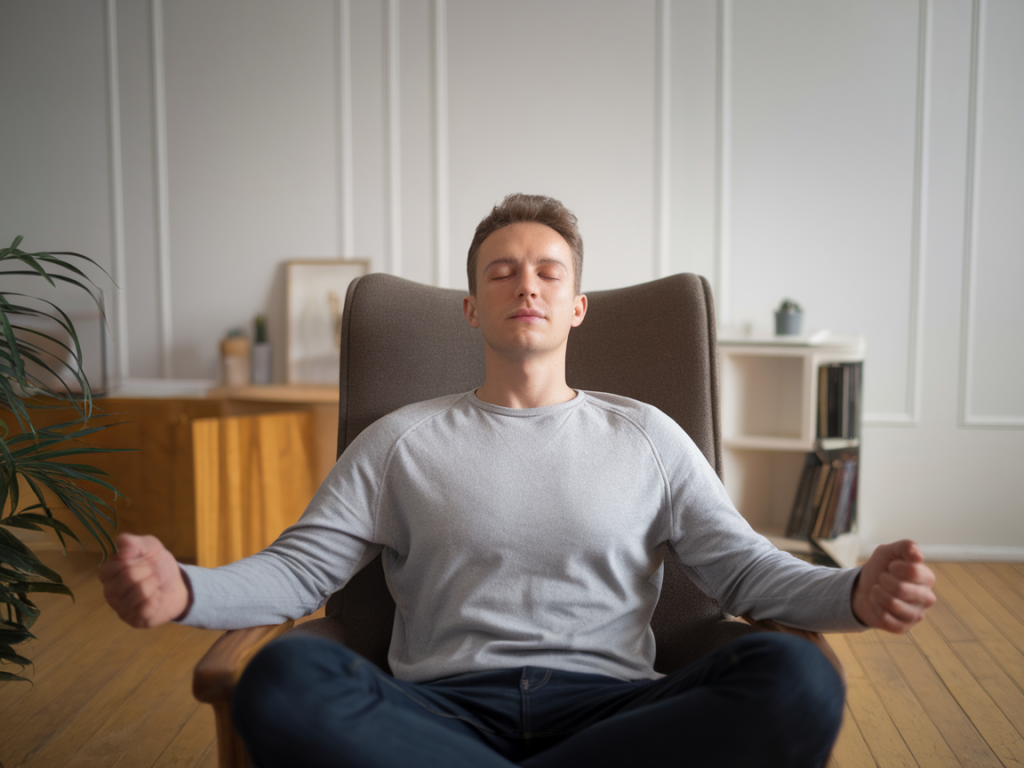
I used to accept the afternoon slump as a fact of modern life: a foggy brain, tight shoulders, and a collapsing to-do list sometime after lunch. Over time I discovered that a simple 10-minute premeeting breathing and posture reset can reliably short-circuit that slump and help me arrive at meetings clearer, calmer, and more present. Below I share the exact routine I use and adapt for busy days — practical steps you can try the next time you feel your energy dip.
Why a 10-minute reset works
Short resets work because they target three common drivers of the slump: shallow breathing, poor posture, and mental drift. When we breathe shallowly and sit hunched, our nervous system leans toward tension and reduced cognitive clarity. A focused breathing pattern calms the nervous system, and a quick posture reset restores oxygen flow and reduces muscular strain. Together they boost alertness without relying on caffeine or sugar.
How I use this routine before meetings
I treat this 10-minute practice as a tiny ritual: not a chore, but a short pause that signals my brain the next activity matters. I usually do it standing near my desk or in a quiet corner if possible. If I’m between back-to-back calls, I’ll do a condensed 6-minute version; if I have a little more time, I’ll stick to the full 10.
The full 10-minute premeeting breathing & posture reset (minute-by-minute)
Use a timer on your phone or a simple timer app (I like Forest for focus or the built-in Clock). This sequence combines breathing, movement, and a quick mental centering.
- Minute 0–1: Prepare — Stand or sit with feet hip-width apart, soften your knees, and roll your shoulders back. Put your phone on Do Not Disturb for 10 minutes or use a meeting-ready focus mode.
- Minute 1–4: Box breathing (or 4-4-6 if stressed) — Inhale for 4 counts, hold 4, exhale 4, hold 4. If you feel more anxious, try inhale 4, hold 4, exhale 6 to encourage longer exhalation and more relaxation.
- Minute 4–6: Gentle mobility — Neck rolls (slowly, three each side), scapular squeezes (5–8 reps), and open-chest stretches. If you’re sitting, push your hips to the back of the chair and draw your chest up.
- Minute 6–8: Diaphragmatic breathing with posture cues — Place one hand on your belly, one on your chest. Breathe into your belly so the lower hand rises more than the upper. Keep your ribs relaxed and shoulders down. Imagine lengthening your spine with each inhale.
- Minute 8–10: Micro-visualization & intention — Close your eyes briefly. Visualize the meeting going calmly: you listening with clarity, sharing what matters, returning to your flow after. Set a single concrete intention (e.g., “I’ll ask one clarifying question” or “I’ll stay curious”).
Quick 6-minute option between calls
Short on time? Do three rounds of box breathing (1 minute each), two scapular squeezes and a chest opener (1 minute), then one minute of belly breathing with an intention. It’s enough to reset your nervous system and posture before you rejoin the screen.
Why posture matters — small adjustments that make a big difference
Posture isn’t about perfection; it’s about alignment that helps breathing and reduces tension. Here are practical cues I use:
- Feet grounded: Keep both feet on the floor if seated. This stabilizes and prevents your pelvis from tipping forward.
- Ribs stacked over hips: Imagine a string from the top of your head pulling you slightly upward; this creates length without rigidity.
- Shoulder softening: Draw shoulders down and back, then relax them so they’re not shrugged but not pinned either.
- Micro-movements: Every 20–30 minutes, roll shoulders, do a chin tuck, or stand for 30 seconds to reset.
What to do if you’re in a cramped meeting room or on public transport
Adaptability is key. If you can’t stand, perform the breathing and place your hands on your belly. Use neck and shoulder rotations subtly. Even sitting upright with a few slow diaphragmatic breaths will help. If you’re on public transport, close your eyes and do a 60-second breath cycle: inhale 4, exhale 6.
Tools and apps I recommend
- Calm or Headspace — short guided breathers and body scans for on-the-go calm.
- Forest — focus timer that turns your reset into a small productive ritual.
- Small foam roller or massage ball — great for rolling out upper back knots before a long meeting.
- Reusable water bottle — sipping during the reset (or after) supports cognitive function. Try a 300–400 ml top-up.
Mini-checklist you can paste in calendar invites
| 2–3 minutes | Turn on Do Not Disturb, stand if possible |
| 3–4 minutes | Box breathing or 4-4-6 breathing |
| 2 minutes | Quick posture/mobility and belly breaths |
| 1 minute | Set one clear intention for the meeting |
What to expect after a few weeks
At first you might notice only small changes: fewer muscle twitches, a slightly calmer tone in your speech, or less need for a second cup of coffee. Over a few weeks, many people report clearer thinking, better presence, and less accumulation of neck or shoulder tension. Small consistent resets are where resilience grows.
Common questions I hear
Can this replace coffee? Not always — but it reduces reliance on caffeine for short-term alertness. Combine a reset with a balanced lunch and hydration for better results.
Do I need to close my eyes? No. Close them if it helps you visualize and calm down, but keep them open if you need to read meeting materials.
What if I feel silly doing breathing exercises at my desk? Start privately or step into a restroom or hallway for a minute. Over time you may feel comfortable doing it openly — many co-workers will notice the difference and ask to try it.
One small experiment to try this week
Schedule two meetings this week where you deliberately take a 10-minute reset beforehand. Notice energy level, clarity, and how you contribute. Keep a tiny journal note: date, meeting type, and one word about how you felt after (e.g., “clear,” “steady,” “sharp”). Small data points help you stick with what works.
If you try this, I’d love to hear how it went — what you changed, what felt awkward, and what helped you show up more present. Little rituals like this are at the heart of reclaiming energy and balance in busy days.

