I used to be a chronic late-night grazier. A few crackers here, half a tub of hummus there, then a mysterious, irresistible craving that led me to the fridge at 10:30 p.m. I told myself it was “just a little snack” and that I’d make up for it the next day. Except I rarely did — I felt sluggish in the morning, my sleep was patchy, and emotionally I was frustrated with the cycle.
Over the years I experimented, listened to sleep and nutrition research, and adapted gentle routines that helped me stop the midnight snacking loop without strict rules or deprivation. Below I share a step-by-step evening meal and snack plan I use with clients and readers — practical, flexible, and kind. If you’re ready to feel calmer around food at night and wake up more energised, try these steps this week.
Why late-night grazing happens (and how to be curious, not harsh)
Before we dive into a plan, let’s get curious. Late-night grazing usually comes from a mix of:
- physiological hunger — your evening meal didn’t provide enough sustained energy;
- habit or boredom — the couch + TV cue triggers eating;
- emotional eating — stress, loneliness or tiredness prompting comfort food;
- sleep debt — poor sleep increases cravings for quick carbs;
- timing mismatch — long gaps between dinner and bedtime create real hunger.
I recommend naming the reason first. Ask yourself: “Am I hungry, tired, bored, or emotional?” That tiny pause changes the tone from self-criticism to practical problem solving.
An evening blueprint: simple steps to stop grazing
This is a five-part evening blueprint I use. It’s flexible — pick what fits your week.
- Plan a satiating dinner that balances protein, fibre, healthy fat and colourful veg. These basics help steady blood sugar and keep evening hunger away.
- Establish a kitchen curfew: a clear window when the kitchen is “closed” (e.g., 8:30–9:00 p.m.).
- Create a soothing wind-down ritual that signals bedtime: dim lights, 10 minutes of journaling, herbal tea, or a short guided breath practice.
- Prep smart snacks for true hunger — small, nutrient-dense options ready-made so you don’t reach for processed foods.
- Address sleep hygiene — better sleep reduces cravings. Keep screens low, keep the room cool, and follow consistent wake/sleep times.
Step-by-step evening meal plan (a template you can copy)
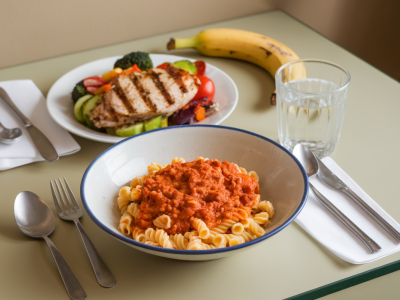
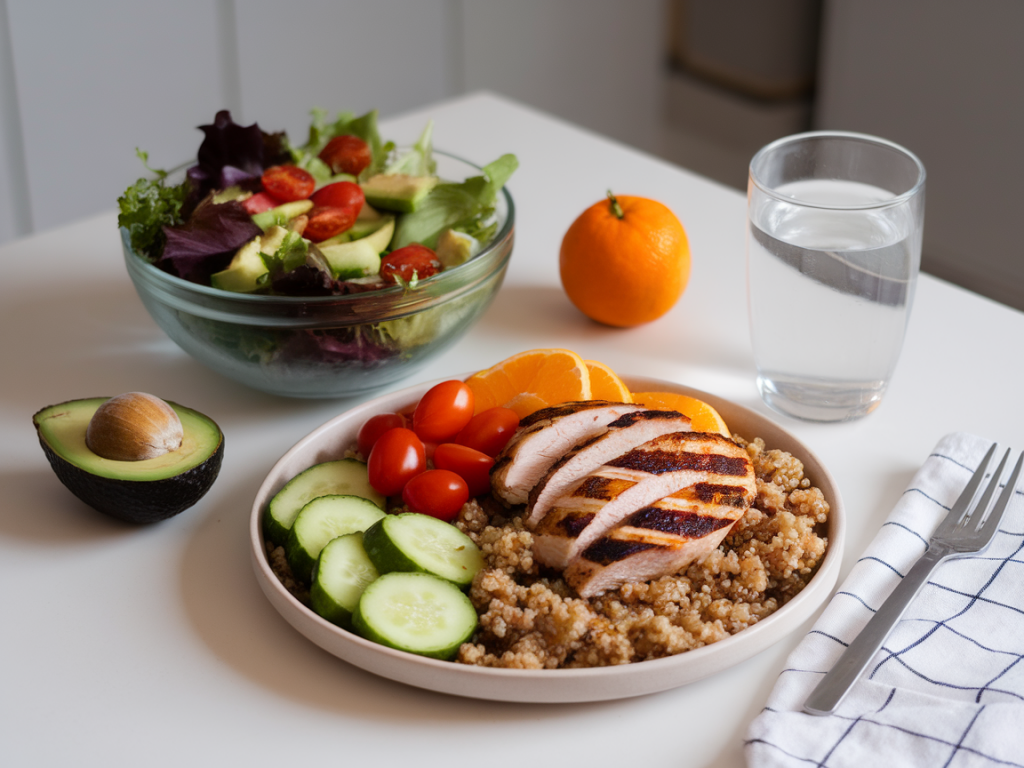
I plan dinners that are simple to cook and leave me satisfied for 3–4 hours. Here’s a typical evening meal template I follow and share with clients:
- Protein (25–35g): a palm-sized portion of grilled salmon, tofu, tempeh, chicken or a legume-based dish.
- Complex carbs (1 cupped-hand): roasted sweet potato, brown rice, quinoa, or a slice of seeded sourdough.
- Vegetables (2 fistfuls): greens, roasted root veg, or a big salad dressed with olive oil and lemon.
- Healthy fat (1 thumb): olive oil, avocado, tahini, or a small handful of nuts.
Example dinner: baked salmon (or chickpea + spinach bake), a small roasted sweet potato, steamed broccoli, and a drizzle of olive oil. Finish with a cup of mint tea. I aim to finish eating 1.5–2 hours before I begin my wind-down routine; if your bedtime is later, aim for 2–3 hours to give digestion time to settle.
Smart night-time snack options (when you truly are hungry)
When hunger strikes after dinner, opt for small and balanced snacks. I keep these on hand so I don’t resort to options that leave me wired or sleepy.
| Snack | Why I like it | Portion |
|---|---|---|
| Greek yoghurt + handful of berries | Protein + fibre to satisfy without heaviness | 100–150g yoghurt + 30g berries |
| Small apple + 1 tbsp almond butter | Sweet + fat/protein to stabilise blood sugar | 1 small apple + 1 tbsp |
| Wholegrain cracker + 1–2 tbsp hummus | Crunch + plant protein, portion-controlled | 2–3 crackers + 1–2 tbsp |
| Warm turmeric milk (dairy or oat) with cinnamon | Comforting ritual that supports sleep without sugar spike | 150–200ml |
| Handful of mixed nuts | Satisfying fats & protein; keep to a small portion | 20–25g |
Tip: measure portions once and put snacks in small bowls or containers. That visual helps me stop at an appropriate portion instead of grazing from a bag.
Evening routines that replace grazing
When the urge to nibble arrives, replacing the behaviour with a small ritual helps. These are my go-to swaps:
- Make a cup of herbal tea (chamomile, lemon balm or a caffeine-free blend like Pukka’s Night Time). Sit down with it and breathe for five minutes.
- Do a 10-minute low-intensity movement: gentle yoga or a walk around the block. Movement often reduces emotional hunger.
- Journal for 5–7 minutes: list three things that went well today and one small plan for tomorrow. This calms my mind and reduces stress-driven snacking.
- Brush your teeth earlier. The minty taste often discourages further eating.
Practical kitchen hacks
- Store tempting foods out of sight: put cookies in a high cupboard, pre-portion nuts into small bags, and remove big bowls from the table.
- Set a kitchen curfew and put a sticky note on the fridge with a reminder like “Are you actually hungry?”
- Prep 3–4 healthy snack portions each weekend so choices are easy during the week.
- If TV is your cue, switch to podcasts or reading so your hands aren’t free to eat mindlessly.
When emotions drive the fridge raid
Late-night eating is often an emotional pattern. If comfort is the thing you’re after, try replacing food with comforting actions:
- Warm salt bath with a book or playlist
- Text a friend or have a short call
- Do a 5-minute breathing practice (box breath: 4 in, 4 hold, 4 out, 4 hold)
Sometimes the pattern is persistent and it helps to track triggers for a week. I use a small notebook to note time, emotion, and what I ate. Patterns emerge quickly and then we can design targeted swaps.
Small experiments to try this week
- Experiment 1: Set a kitchen curfew one night and have a pre-planned snack available. Note how you feel the next morning.
- Experiment 2: Replace one TV night with a podcast and herbal tea. Observe whether you still want to snack.
- Experiment 3: Move dinner 30 minutes later (if possible) and see if hunger decreases before bed.
These tiny experiments are about data, not perfection. Try something for three nights and reflect. Keep what helps, tweak what doesn’t.
If you want a printable version of my evening snack list or a sample 7-day dinner + snack plan tailored to vegetarian or omnivore preferences, tell me which you prefer and I’ll put one together for you.